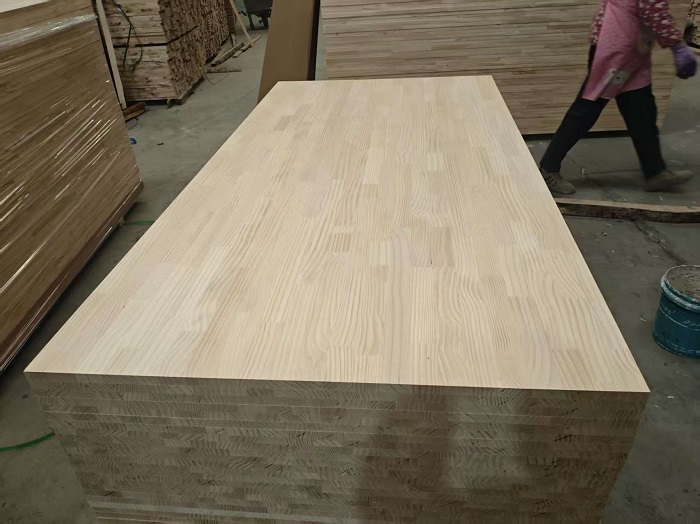
Understanding why this material performs so well requires a closer look at how finger joints work, how the plywood core contributes to rigidity, and how the engineered nature of the product supports repeatable results. With the right design and finishing approach, finger joint pine plywood can serve as the foundation for furniture that remains sturdy for years.
Why Finger Joints Matter for Structural Integrity
Finger joints are created by cutting interlocking “fingers” into two pieces of wood, then bonding them with high-strength adhesive. This technique increases the surface area of the glued joint. Instead of joining two flat ends together, each finger creates additional bonding surfaces, distributing stress more effectively.
This design brings a long list of stability benefits:
The joint minimizes weak spots associated with knots or uneven grain.
The adhesive bond often exceeds the strength of the wood around it.
The predictable joint pattern reduces the likelihood of splits.
Lengths of pine can be made straighter and more uniform.
Because pine can vary significantly from board to board, finger jointing removes much of the unpredictability associated with natural wood. The technique makes every piece more consistent, even before the product becomes part of a plywood panel.
When these finger-jointed strips are laminated together into plywood, the result is a material engineered for strength from multiple directions.
The Role of the Plywood Core in Stability
Plywood is known for its layered structure. Each layer, or ply, is positioned with its grain perpendicular to the adjacent layer. This alternating grain direction resists the natural tendency of solid wood to swell, shrink, or cup along the grain.
Finger joint pine plywood carries the same advantage but with an added layer of uniformity because the pine components themselves are engineered. The benefits include:
Reduced seasonal movement
Strong resistance to bending forces
A flatter surface over large panel sizes
More predictable machining and joinery
Furniture that relies on stability—such as shelving, tabletops, and cabinet structures—benefits directly from this construction method. Unlike solid boards, which can distort over time, finger joint pine plywood retains its shape far more reliably.
Load Distribution and Furniture Longevity
One of the less obvious strengths of finger joint pine plywood is its ability to distribute loads across the entire panel. When weight is applied to a shelf or tabletop made from solid wood, the load primarily affects the direction of the grain. If that grain has any natural weaknesses, the board may sag or crack.
With finger joint pine plywood:
Stress spreads across multiple orientations.
Shear resistance improves due to cross-laminated layers.
Edges remain less prone to splitting.
This means furniture built with this material often retains structural soundness even under continuous load. For example, bookshelves made from finger joint pine plywood tend to stay straighter over time than comparable boards made of solid pine.
Another important aspect is screw-holding capability. Because the panel is engineered and layered, screws grip multiple fiber directions. This strengthens joints between furniture components and reduces the risk of fasteners loosening during repeated use.
Dimensional Stability in Indoor Environments
Pine is known for sensitivity to humidity changes. While it is durable and workable, it can expand and contract noticeably. Finger jointing and cross-lamination work together to reduce this movement.
This improved stability shows up in several ways:
Doors on cabinets are less likely to warp.
Long tabletops stay flatter across the seasons.
Furniture components fit together more reliably over time.
Indoor furniture often sits close to heat sources, windows, or air-conditioning vents. These micro-environments create subtle humidity shifts. Engineered pine plywood handles these fluctuations better than solid wood, which reduces maintenance and minimizes the need for adjustments.
Smooth Surfaces That Accept Paint Consistently
While strength is the main focus, visual consistency also plays a role in long-term durability. Panels that accept paint evenly are easier to protect from moisture and wear.
Finger joint pine plywood usually has clean, uniform surfaces. Because knot-heavy sections of pine are removed or minimized, the grain tends to behave predictably under primer and paint. This leads to:
Better adhesion
Reduced grain telegraphing
A smoother final finish
Protection from abrasion and moisture
A well-finished surface does more than look good—it creates a barrier that slows wear and protects the panel from minor scratches, humidity, or household cleaning products.
Practical Benefits for Furniture Construction
Beyond strength and stability, finger joint pine plywood brings practical advantages that make the building process smoother. These qualities contribute indirectly to stronger finished pieces because they reduce errors, material waste, and unexpected structural weaknesses.
Consistent Thickness and Flatness
Panels are manufactured to uniform standards. This consistency means:
Joints fit accurately
Hardware aligns correctly
Large furniture pieces remain square
When every panel shares the same thickness, assembly becomes more predictable. Drawer slides operate smoothly, cabinet doors mount evenly, and tabletops don’t require excessive leveling.
Excellent Machinability
Finger joint pine plywood cuts cleanly without excessive splintering. Builders can rely on straight cuts and stable edges, even when working with larger panels. The material also responds well to:
Routing
Drilling
Edge profiling
Because the internal structure is controlled and uniform, the panel behaves consistently from edge to edge.
Stronger Adhesive Bonding
Wood glue adheres well to pine and even better to the engineered surfaces in finger joint panels. When two plywood components are glued together, the bond is typically stronger than the wood fibers themselves. This supports high-stress applications such as:
Wide shelves
Stacked cabinet structures
Furniture frames
Glue bonds that remain stable over time prevent joints from loosening or creaking.
Applications Where Its Strength Truly Shows
Different types of furniture benefit from finger joint pine plywood in different ways. Some of the most common uses include:
Shelving Units
Long spans maintain rigidity, especially when the shelves carry heavy objects like books or tools. The cross-laminated core resists bowing.
Tabletops and Work Surfaces
The smooth surface accepts primer and paint well, and the internal structure prevents warping. For painted tables and desks, it offers an appealing balance between stability and cost.
Cabinets and Built-ins
Cabinets remain square and retain their structure even with frequent use. Doors, carcasses, and face panels benefit from reliable dimensional control.
Bed Frames and Storage Furniture
Stability under repeated load is essential. Panels hold screws well, resist splitting, and distribute weight efficiently.
Decorative Furniture With Painted Finishes
Because finger joint pine plywood takes paint evenly, it supports modern, clean furniture styles without distracting grain patterns.
Edge Treatment and Surface Care for Strength Retention
Although finger joint pine plywood is strong, protecting vulnerable areas helps preserve its structural qualities.
Seal exposed edges with primer to reduce moisture absorption.
Avoid leaving end grain unfinished, especially near sinks or windows.
Sand lightly between coats to keep paint adhesion secure.
These steps reinforce the natural stability of the panel and extend the life of the furniture.
Environmental and Resource Efficiency Considerations
Finger joint construction uses shorter wood segments that might otherwise go to waste.
These pieces receive new life in a strong, engineered product. For builders interested in
responsibly sourced materials, this can be an appealing aspect.
Combined with plywood’s efficient use of wood fibers, these panels offer strength and performance without requiring long, knot-free lumber. It‘s a practical way to balance material quality with resource conservation.
Bringing It All Together
Finger joint pine plywood succeeds in furniture building because of its engineered reliability. The finger-jointed segments create a uniform, stable base. The cross-laminated core strengthens the panel from multiple directions. Surfaces stay flat, joints remain tight, and the material responds predictably during construction and throughout years of use.
Whether used for shelving, cabinetry, tables, or structural components, it offers a combination of strength, stability, and workability that suits a wide range of furniture styles. Thoughtful finishing and proper design reinforce these advantages, allowing the material to support pieces that remain solid, functional, and attractive long after they’re built.