Posted on 2026-4-23 8:06:10
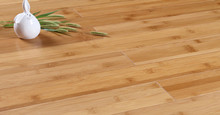
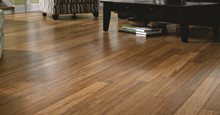
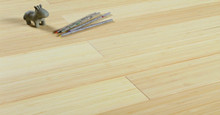
When you invest in vertical bamboo flooring, you are bringing a distinct, architectural aesthetic into your home. The narrow, linear grain of the vertical cut offers a clean, pinstriped appearance that aligns perfectly with modern, minimalist, and contemporary interior designs. It brings the warmth of a natural material without the swirling, busy patterns often found in traditional hardwoods. However, achieving that flawless, sweeping look requires more than just high-quality planks. The final appearance and long-term durability of your floor depend entirely on the precision and care taken during the installation process.
Vertical bamboo is an incredibly dense and resilient material, but like any natural flooring product, it reacts to its environment. It expands, contracts, and shifts based on moisture and temperature. If the installation is rushed or proper preparatory steps are skipped, even the highest-grade bamboo can suffer from buckling, cupping, or unsightly gaps. To ensure your flooring project yields professional-tier results, it is essential to understand the specific behaviors of vertical bamboo and tailor your installation approach accordingly.
The Critical Phase of Acclimation
The most common mistake made during any wood or bamboo flooring project occurs before a single plank is ever cut or fastened. Failing to properly acclimate the material to the installation environment is a guaranteed path to flooring failure. Bamboo is hygroscopic, meaning it absorbs and releases moisture depending on the relative humidity of the surrounding air. When the planks leave a climate-controlled warehouse, they are at a specific moisture content. If they are immediately installed in a home with a different humidity level, they will rapidly expand or shrink after being fastened down.
To prevent this, the bamboo must be acclimated to the specific room where it will be installed. This does not simply mean leaving the sealed boxes in the hallway for a weekend. The HVAC system in the home must be running at regular, occupied conditions for at least five days prior to delivery. Once the flooring arrives, the boxes should be opened, and the planks should be laid flat or stacked with small wooden spacers (stickers) between them to allow air to circulate completely around each board.
Professionals use a moisture meter to determine exactly when the flooring is ready. You must measure the moisture content of the bamboo and compare it to the moisture content of the wooden subfloor. The two materials should be within two to three percentage points of each other before installation begins. Depending on your local climate and the season, this acclimation process can take anywhere from a few days to over a week. Patience during this phase is the foundation of a successful installation.
Mastering Subfloor Preparation
A vertical bamboo floor is only as stable as the surface beneath it. Because the linear grain of vertical bamboo draws the eye in a continuous line, any dips or humps in the subfloor will become glaringly obvious once the planks are laid. Furthermore, an uneven subfloor creates hollow spots that cause the floor to squeak, flex, and eventually separate at the joints.
If you are installing over a concrete slab, you must ensure it is entirely flat, clean, and dry. Industry standards typically require the subfloor to be flat within three-sixteenths of an inch over a ten-foot radius. Use a long straightedge or a taut string line across the room to identify high and low spots. High spots in concrete must be ground down using a concrete grinder, while low spots should be filled with a high-quality, Portland cement-based self-leveling compound.
Moisture testing is absolutely vital for concrete subfloors. Even if a slab looks dry to the naked eye, it can emit moisture vapor from the ground below. Conduct a calcium chloride test or use an in-situ relative humidity probe to measure the vapor emission rate. If the moisture levels exceed the flooring manufacturer‘s strict guidelines, you must apply a liquid moisture barrier before proceeding with a glue-down installation.
For wooden subfloors, such as plywood or OSB, ensure all panels are securely fastened to the joists. Walk the entire room listening for squeaks. Any loose areas must be screwed down tightly with deck screws to prevent future noise. The wood subfloor must also be sanded flat at the seams to remove any peaks caused by swollen plywood edges.
Choosing and Executing the Right Installation Method
Vertical bamboo flooring can generally be installed using one of three methods: nail-down, glue-down, or floating. The best method depends on your subfloor type and the specific engineering of the bamboo planks you purchased.
For wooden subfloors, the nail-down or staple-down method is traditional and highly effective. When using this technique, an underlayment of 15-pound builder‘s felt or specialized flooring paper should be laid out first to act as a slight moisture retarder and to prevent the wood-on-wood squeaking that can occur as the house settles. Because bamboo is significantly harder than most domestic hardwoods, standard flooring cleats may bend or cause the tongues of the planks to split. It is often recommended to use an 18-gauge flooring cleat nailer rather than standard 16-gauge staples. The thinner cleat penetrates the dense vertical bamboo more smoothly, reducing the risk of fracturing the fragile locking mechanisms on the edges of the boards. Ensure your air compressor is set to the correct pressure—usually between 90 and 100 PSI—so the fastener sits perfectly flush inside the nail pocket.
If you are installing over concrete, the glue-down method is required. This approach provides a solid, incredibly quiet floor with no hollow sounds. The secret to a successful glue-down installation lies in the adhesive. Always use a premium, moisture-curing urethane adhesive. These adhesives possess elastomeric properties, meaning they remain slightly flexible after curing. This flexibility allows the bamboo to undergo its natural, microscopic expansions and contractions without shearing away from the subfloor. When troweling the adhesive, strictly follow the manufacturer‘s guidelines regarding trowel notch size. Using the wrong trowel can result in too little adhesive, causing the floor to pop loose, or too much adhesive, which can ooze up between the planks and ruin the finish.
Floating installations are typically reserved for engineered vertical bamboo with a click-lock edge system. In this scenario, the planks are attached to one another rather than the subfloor. A high-quality underlayment pad is essential here to absorb sound and provide a slight cushion. When floating a floor, the perimeter expansion gaps become even more critical, as the entire floor acts as a single, moving unit.
The Art of Racking the Floor
Once the subfloor is prepped and your method is chosen, the physical laying of the planks begins. This phase requires a technique known as "racking." Racking is the process of laying out the flooring dry before fastening it down.
Even though vertical bamboo has a highly consistent pinstripe grain, it is still a natural product with subtle variations in color and shade. If you pull planks from only one box at a time, you risk creating dark or light patches on your floor. To achieve a harmonious, blended aesthetic, you must work from at least four or five different boxes simultaneously. As you pull the boards, lay them out across the floor, mixing the shades to create a balanced visual texture.
Racking also allows you to manage the physical layout of the joints. In a professional installation, the end joints of the planks must be staggered randomly. You want to avoid creating "H-joints" (where joints line up perfectly with a plank between them) or "stair-step" patterns, which draw the eye away from the beautiful, long grain of the bamboo. A good rule of thumb is to ensure that end joints in adjacent rows are separated by at least six to eight inches.
Managing Expansion Gaps and Directional Layout
Wood and bamboo expand outward, primarily across their width rather than their length. Because of this, you must leave an expansion gap around all fixed vertical obstacles in the room. This includes the perimeter walls, door frames, kitchen islands, and fireplace hearths.
The standard required expansion gap is usually half an inch, though you should always verify this with the manufacturer‘s specific instructions. If you fail to leave this gap, the bamboo will eventually press against the drywall or baseboards as humidity rises. With nowhere else to go, the sheer force of the expanding floor will cause the planks to heave upward, creating large buckles in the middle of the room. These gaps are later hidden by reinstalling the baseboards and adding a quarter-round or shoe molding. When nailing the molding in place, always drive the nails into the wall or baseboard, never down into the bamboo floor itself. Nailing into the floor locks it in place, defeating the purpose of the expansion gap.
The direction in which you lay the vertical bamboo also drastically impacts the room‘s final appearance. Aesthetically, the most pleasing layout usually runs the planks parallel to the longest wall in the room. This enhances the linear nature of the vertical grain, making the room feel longer and more expansive. If the room is relatively square, consider running the planks parallel to the primary source of incoming natural light. When the pinstriped grain aligns with the light path, it minimizes the visibility of the seams between the boards, resulting in a smoother, more unified surface.
Cutting Techniques and Tool Selection
Because vertical bamboo is constructed from dozens of thin strips bonded together under high pressure, cutting it requires a specific approach to avoid splintering the grain. A standard wood blade with coarse teeth will tear the fibers, leaving ragged edges that look terrible and make it difficult to lock the planks together.
Always equip your miter saw and table saw with high-tooth-count, carbide-tipped blades. An 80-tooth blade designed for fine crosscutting is ideal. When cutting a plank to fit against a wall, cut with the finished side facing up if using a miter saw, and finished side down if using a circular saw, to ensure any minor splintering happens on the back of the board. If you are making complicated cuts around door casings or floor vents, applying a strip of blue painter‘s tape over the cut line before taking a jigsaw to it will help hold the delicate vertical fibers intact.
Environmental Maintenance Post-Installation
The success of your installation does not end when the final piece of molding is nailed into place. Keeping a vertical bamboo floor looking pristine requires maintaining a stable indoor environment. Bamboo thrives in the same conditions that humans find comfortable.
The relative humidity inside the home must be kept consistent, ideally between 40% and 60% year-round. In dry winter months, central heating systems pull moisture out of the air, which can cause the bamboo planks to shrink and create small gaps between the boards. Utilizing a whole-home humidifier can prevent this shrinkage. Conversely, during humid summer months, air conditioning or a dehumidifier is necessary to prevent the bamboo from absorbing excess moisture and swelling.
Attention to detail during every step, from the initial moisture testing to the exact staggering of the planks, ensures the floor operates as a single, structurally sound unit. A methodical approach guarantees that the sharp, clean lines of your vertical bamboo flooring remain flat, secure, and visually striking for decades to come, providing a beautiful and stable foundation for your living space.