Posted on 2026-4-12 9:16:33
Flooring choices have always reflected a mix of practicality, aesthetics, and the values of a given time. For decades, traditional hardwood held a near-unquestioned position as the premium option for residential interiors. Oak, maple, and walnut floors carried a sense of permanence and craftsmanship that appealed to homeowners across generations. Yet, as design priorities shift and environmental awareness deepens, bamboo flooring has moved from a niche alternative to a preferred material in many modern homes.
The rise of bamboo flooring is not a matter of trend alone. It reflects broader changes in how homeowners evaluate durability, sustainability, cost efficiency, and visual flexibility. When compared closely with traditional hardwood, bamboo often meets or exceeds expectations in areas that matter most in contemporary living spaces.
One of the most compelling advantages of bamboo flooring lies in its environmental profile. Bamboo is technically a grass, not a wood, and its growth cycle is significantly faster than that of hardwood trees. While oak or maple may take several decades to mature, bamboo can reach harvest readiness in as little as three to five years. This rapid renewability makes bamboo a far more sustainable resource, especially in an era where responsible sourcing and reduced environmental impact are becoming central to construction decisions.
Harvesting bamboo also tends to be less destructive to ecosystems. The plant regenerates from its root system after being cut, eliminating the need for replanting and reducing soil disruption. In contrast, traditional hardwood harvesting often involves clearing large areas of forest, with longer recovery times and greater ecological consequences. For homeowners who value environmentally conscious materials, bamboo presents a clear and measurable advantage.
Durability is another area where bamboo flooring has steadily gained ground. Early versions of bamboo flooring were sometimes criticized for being softer than hardwood, but manufacturing improvements have changed that perception. Strand-woven bamboo, in particular, has become known for its exceptional hardness. By compressing bamboo fibers under high pressure with resins, manufacturers create a dense material that can outperform many traditional hardwoods in resistance to dents and wear.
In high-traffic households, this resilience makes a noticeable difference. Living rooms, kitchens, and hallways often experience heavy daily use, and flooring materials must withstand constant pressure from foot traffic, furniture movement, and occasional impacts. Bamboo’s structural strength allows it to maintain its appearance over time, reducing the need for frequent repairs or refinishing.
Moisture resistance is another factor influencing the shift toward bamboo. While no natural flooring material is entirely immune to water damage, bamboo generally performs better than many hardwoods in environments with fluctuating humidity. This is especially relevant in regions where seasonal changes bring varying moisture levels into the home. Traditional hardwood can expand, contract, or warp under these conditions, leading to gaps or uneven surfaces. Bamboo’s composition gives it greater dimensional stability, helping it maintain its shape more consistently.
This stability also expands the range of applications within the home. Areas that were once considered risky for hardwood—such as basements or kitchens—are increasingly being fitted with bamboo flooring. Homeowners appreciate the ability to achieve a cohesive look throughout the house without worrying about material limitations in certain rooms.
Cost considerations play a significant role in flooring decisions, and bamboo often presents a more accessible price point than traditional hardwood. While premium bamboo products can approach the cost of high-end hardwoods, many options remain competitively priced without sacrificing quality. The faster growth cycle of bamboo contributes to its affordability, as supply can more easily meet demand.
Installation costs can also be favorable. Bamboo flooring is available in a variety of formats, including click-lock planks that simplify the installation process. This reduces labor time and, in some cases, allows for do-it-yourself projects. Traditional hardwood installation, by contrast, often requires more specialized skills, including precise nailing or gluing techniques, followed by sanding and finishing.
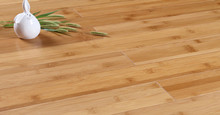
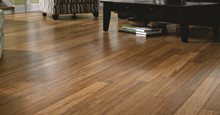
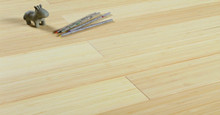
Aesthetic versatility is another reason bamboo flooring has gained traction in modern interiors. While hardwood is often associated with classic, warm tones, bamboo offers a broader palette that aligns well with contemporary design preferences. Natural bamboo provides a light, clean look that complements minimalist spaces, while carbonized bamboo introduces deeper, richer hues. Strand-woven varieties can be stained in a wide range of colors, from pale neutrals to dark espresso shades.
The grain pattern of bamboo also differs from traditional hardwood, offering a distinct visual texture. Some homeowners prefer the linear, uniform appearance of bamboo, which can create a sense of order and openness in a room. Others are drawn to the more varied, organic patterns of strand-woven bamboo, which add character without overwhelming the space.
As open-concept living continues to shape residential design, flooring materials must work across multiple functional areas without visual interruption. Bamboo’s adaptability makes it well-suited for these layouts. It can transition smoothly from living areas to dining spaces and even into kitchens, supporting a unified design language throughout the home.
Maintenance is another practical consideration where bamboo often proves advantageous. Like hardwood, bamboo flooring benefits from regular cleaning and occasional refinishing, but it tends to resist scratches and surface wear more effectively, especially in its strand-woven form. Routine care typically involves sweeping or vacuuming to remove debris and using a damp mop with appropriate cleaning solutions.
For households with pets or children, this ease of maintenance is particularly appealing. Scratches from claws or dropped objects are less likely to leave lasting marks, and the surface remains easier to keep clean. While no flooring material is entirely maintenance-free, bamboo strikes a balance between durability and manageable upkeep.
Indoor air quality is an increasingly important concern in modern homes, and flooring materials play a role in this aspect as well. Many bamboo flooring products are manufactured with low-VOC (volatile organic compound) adhesives and finishes, contributing to healthier indoor environments. When compared to certain hardwood products that may use higher-emission finishes, bamboo can offer a more comfortable living space for occupants sensitive to air quality issues.
Technological advancements in manufacturing have further enhanced bamboo flooring’s performance. Improvements in adhesive formulations, pressing techniques, and finishing processes have addressed many of the early concerns associated with bamboo products. As a result, modern bamboo flooring often meets stringent quality standards and performs reliably across a wide range of conditions.
The perception of bamboo as a lesser alternative to hardwood has also shifted over time. Designers and architects increasingly specify bamboo in high-end residential projects, recognizing its combination of strength, sustainability, and visual appeal. What was once seen as an unconventional choice is now integrated into mainstream design conversations.
At the same time, traditional hardwood continues to hold its place in the market, particularly for homeowners who value its historical associations and unique grain patterns. There is a certain character to aged hardwood that bamboo does not replicate. However, the decision between the two materials is no longer one-sided. Bamboo has established itself as a viable, and often preferable, option in many contexts.
Another aspect worth considering is the adaptability of bamboo flooring to evolving lifestyle needs. As homes become more multifunctional—serving as workplaces, relaxation spaces, and social environments—the materials used within them must accommodate varied demands. Bamboo’s durability, moisture tolerance, and aesthetic range allow it to support these changing uses without compromising performance or style.
Acoustic performance is sometimes overlooked in flooring discussions, yet it can influence comfort within a home. Bamboo flooring, particularly when installed with appropriate underlayment, can help reduce noise transmission. This is beneficial in multi-level homes or open-plan layouts where sound can travel easily. While hardwood can also be paired with sound-reducing materials, bamboo’s compatibility with modern installation systems makes it a practical choice in this regard.
Another subtle but important advantage is consistency in supply. Because bamboo grows rapidly and is cultivated extensively, it is less susceptible to the supply constraints that can affect certain hardwood species. This consistency allows for better matching of flooring materials over time, which is useful for renovations or expansions where additional flooring needs to blend with existing installations.
The global focus on sustainability is likely to continue shaping material choices in construction and interior design. Bamboo aligns well with this direction, offering a renewable resource that does not compromise on performance. Its ability to combine environmental responsibility with practical benefits positions it strongly in the current market.
Homeowners are also becoming more informed and selective in their choices. Access to detailed product information, certifications, and performance data allows for more deliberate decision-making. In this context, bamboo flooring often stands out for its transparency in sourcing and manufacturing processes.
It is also worth noting that bamboo flooring continues to evolve. Ongoing research and development are likely to yield further improvements in durability, finish quality, and environmental impact. As these advancements are incorporated into new products, the gap between bamboo and traditional hardwood may continue to widen in favor of bamboo.
The shift toward bamboo flooring reflects a broader reconsideration of what defines quality in a home. It is no longer solely about tradition or appearance, but about how materials perform over time, how they affect the environment, and how they support modern living patterns. Bamboo meets these criteria in ways that resonate with contemporary priorities.
While hardwood will always have its place, particularly in settings where its historical character is desired, bamboo’s combination of sustainability, strength, affordability, and design flexibility gives it a distinct edge in many modern applications. As more homeowners experience these benefits firsthand, bamboo flooring’s position in the market is likely to remain strong and continue expanding.