Posted on 2026-5-28 10:20:39
Selecting a worksurface material for commercial, institutional, or premium residential office environments requires balancing structural engineering, long-term durability, visual harmony, and environmental accountability. While traditional hardwoods, synthetic laminates, and composite wood materials have served as industry standards for decades, advancements in materials science have positioned solid industrial bamboo as a superior alternative. This material is no longer confined to novelty accents or rudimentary flooring; it has emerged as a high-density, precisely engineered substrate capable of meeting the rigorous mechanical demands of modern furniture design.
A bamboo desktop or tabletop represents a significant shift in how interior spaces are specified. It addresses the practical challenges of daily wear, heavy hardware loads, and dynamic structural stresses while satisfying the aesthetic demand for clean, geometric, and organic design languages. Understanding the deployment of bamboo as a primary horizontal workspace surface requires exploring its botanical mechanics, industrial manufacturing processes, structural configurations, and long-term performance characteristics under varied stress profiles.
The Botanical Mechanics: Why Moso Bamboo Exceeds Hardwood Metrics
To understand the structural superiority of a bamboo worksurface, one must first examine the raw material itself. Unlike traditional timber sources derived from slow-growing dicotyledonous trees, commercial structural bamboo is manufactured from Phyllostachys edulis, commonly known as Moso bamboo. Botanically classified as a grass, the unique growth mechanics of this species provide it with distinct cellular advantages over traditional hardwoods like oak, maple, and walnut.
Moso bamboo reaches its full structural maturity and maximum density within four to five years. During this rapid growth cycle, the plant develops an incredibly dense network of vascular bundles. These long, continuous cellulose fibers run uninterrupted from the root system to the apex of the culm. This vascular structure gives the raw material an exceptional strength-to-weight ratio. When these fibers are harvested, processed, and consolidated into dense architectural panels, the resulting material exhibits mechanical characteristics that rival, and frequently surpass, standard commercial hardwoods.
On the Janka hardness scale-the standard industrial metric used to measure a material‘s resistance to indentation and wear-natural carbonized bamboo registers significantly higher than standard white oak and northern maple. While typical red oak averages approximately 1,290 lbf on the Janka scale, specialized strand-woven bamboo formulations can exceed 3,000 lbf, positioning it among the hardest available workspace surfaces in the commercial furniture market. This high density is critical for preventing surface marring, deep indentations from writing instruments, and structural deformation caused by heavy perimeter-mounted monitor arrays or industrial equipment.
The Industrial Manufacturing Paradigm: From Raw Culm to Architectural Slab
A solid bamboo desktop is not a single sliced piece of timber; it is an intricately engineered composite structure produced through advanced thermal, chemical, and mechanical stabilization processes. The transition from a hollow, cylindrical stalk to a perfectly flat, warp-resistant architectural slab involves several distinct phases of precision engineering.
1. Splitting, Planing, and Internal Node Removal
The process begins by harvesting mature culms, which are then split longitudinally into uniform green strips. These strips undergo rigorous mechanical planing to remove the outer waxy silicious rind and the soft, fibrous inner pith. This isolating process ensures that only the high-density middle layer of the bamboo wall-where the concentration of vascular bundles is highest-is retained for panel construction. The internal nodes are completely milled flat to create a clean, linear raw material.
2. Thermal Modification and Sugar Extraction
Raw bamboo contains natural starches and sugars that make it susceptible to insect infestation and moisture-driven fungal degradation if left untreated. To neutralize this vulnerability, the milled strips are subjected to a multi-hour pressure-cooking and thermal modification process. By processing the material at temperatures ranging from 140 to 180 degrees Celsius under steam pressure, the volatile sugars are completely caramelized and extracted.
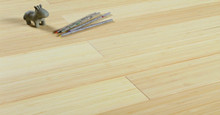
This thermal treatment serves a dual purpose. Mechanically, it alters the cellular structure of the fibers, drastically reducing the material‘s equilibrium moisture content and expanding its dimensional stability. Aesthetically, the caramelization process alters the native hue of the fiber. Shorter exposure yields a pale, clean blonde or natural tone, while extended thermal processing deepens the material into a rich, amber, or mocha hue. This color alteration occurs completely through the cross-section of the fiber, ensuring that subsequent sanding or deep scratches do not reveal a mismatched interior color.
3. Kiln Drying and Moisture Equilibrium Stabilization
Following thermal modification, the strips are transferred to computerized dry kilns where moisture levels are systematically reduced to a precise target range of 6% to 8%. This window matches the typical interior equilibrium moisture content found in climate-controlled office environments globally. By stabilizing the moisture levels before lamination, manufacturers significantly reduce the internal stresses that cause splitting, twisting, or cupping in finished tabletops.
Structural Topologies: Architectural Styles and Internal Grain Layouts
The visual pattern and mechanical performance of a finished bamboo tabletop are dictated by how the processed strips are oriented and bonded during the lamination process. Specifiers and furniture designers choose from three primary structural topologies, each offering a distinct aesthetic and physical profile.
Vertical Grain Orientation
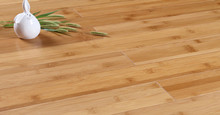
In a vertical grain configuration, the narrow edge-grain faces of the planed bamboo strips are turned upward and laminated side-by-side. This arrangement produces a highly uniform, minimalist appearance characterized by fine, repeating linear pinstripes. From a mechanical standpoint, the vertical orientation exposes the dense lateral walls of the vascular bundles to the surface of the desktop. This makes vertical grain tabletops exceptionally resistant to linear scratching and surface wear, making them highly suited for contemporary technical workspaces, drafting tables, and laboratory environments where a neutral, non-distracting background pattern is required.
Horizontal Grain Orientation
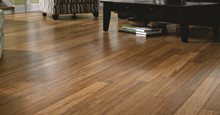
Horizontal grain panels are constructed by laying the wide, flat faces of the bamboo strips parallel to the surface plane and laminating them edge-to-edge. This method showcases the natural botanical architecture of the plant, preserving the visible growth rings, subtle color variations, and characteristic node markings. Horizontal desktops present a warmer, more distinctly organic appearance that clearly communicates the material‘s origin. Because the wider face is exposed, this configuration exhibits slightly more natural elasticity, making it popular for executive desks, meeting tables, and residential workspaces where visual texture is a core design requirement.
Strand-Woven Processing
For high-traffic public installations, manufacturing workstations, or heavy industrial tables, strand-woven bamboo represents the pinnacle of structural durability. Instead of using intact rectangular strips, the bamboo culm is mechanically crushed into long, interconnected fiber strands. These raw strands are thoroughly coated with eco-friendly structural adhesives and placed into heavy-duty hydraulic presses under extreme pressure and heat.
The resulting high-density block is sliced into solid slabs. Strand-woven bamboo features an intricate, non-directional grain pattern resembling exotic hardwood or marble burl. Because the fibers are completely intertwined and compressed to an extreme density-often exceeding 1.1 grams per cubic centimeter-strand-woven tabletops are virtually impervious to high impacts, heavy moisture exposure, and surface indentation. They can be milled, routed, and finished using standard carbide-tipped woodworking machinery, allowing for complex edge profiles and custom grommet cutouts.
Mechanical Performance Matrix and Dimensional Stability
The primary point of failure for large horizontal wood surfaces is volumetric movement caused by shifting ambient humidity. Solid hardwoods naturally expand and contract across their grain lines, which can lead to warped desk surfaces, stuck drawers, cracked seams, and loose fastening points where the top interfaces with a metal understructure.
Engineered bamboo tabletops handle these atmospheric stresses exceptionally well due to their cross-laminated internal architecture. Most high-quality bamboo surfaces are manufactured using multi-ply construction techniques, similar to high-grade architectural plywood. A typical three-layer bamboo slab features a thick core layer oriented perpendicular to the top and bottom wear layers.
This cross-directional grain integration provides several critical performance advantages:
Minimized Linear Expansion: The perpendicular core layer mechanically restrains the outer faces, limiting total expansion and contraction to negligible fractions of a millimeter across wide climate shifts.
High Tensile and Flexural Strength: Because the long-chain cellulose fibers resist pulling forces along their length, a bamboo desktop resists sagging or bowing over long spans, even when unsupported by a central steel beam. This allows for wider spacing between sit-stand desk legs and clean, cantilevered design footprints.
Superior Fastener Retention: The dense, interlocking fiber network holds wood screws, machine threaded inserts, and structural anchors with higher pull-out resistance than softer core materials like particleboard, medium-density fiberboard (MDF), or softwoods. This ensures that heavy desktop frames and adjustable-height mechanisms can be securely attached and re-attached without stripping the substrate.
Aesthetic Integration within Modern Architectural Disciplines
From an interior design standpoint, solid bamboo tabletops offer a versatile canvas that works beautifully across many architectural styles. The crisp, clean lines of vertical grain panels fit perfectly into Scandinavian minimalism, mid-century modern workspaces, and technical industrial offices. The subtle, repeating rhythm of the grain introduces organic warmth without introducing visual clutter or distracting from architectural geometries.
For spaces emphasizing biophilic design principles-which prioritize integrating natural elements into the built environment to reduce stress and improve focus-horizontal or strand-woven bamboo surfaces offer an authentic connection to nature. The visible nodes and variegated tones break up the sterile feel of corporate drywall and aluminum, providing a tactile, grounding focal point in collaborative zones, private executive suites, and home offices alike.
Furthermore, because the material is uniform throughout its thickness, the exposed edges can be sculpted into elegant structural profiles. Instead of hiding the edges behind PVC banding or veneer tape, designers frequently highlight the multi-layered edge profile with subtle bevels, sweeping chamfers, or ergonomic undercut slopes. This exposed edge serves as an authentic design element, showcasing the genuine, non-composite construction of the slab.
Finishing Technologies and Architectural Maintenance Regimens
The longevity of a bamboo worksurface depends heavily on the application of appropriate industrial finishing technologies. While the raw compressed fiber provides structural hardness, the surface requires sealing to guard against fluid absorption, staining, and surface oxidation. Professional bamboo surfaces are typically finished using one of two primary industrial coating pathways:
Polyurethane and UV-Cured Acrylic Seals
For corporate environments, educational facilities, and high-volume commercial spaces where chemical resistance and low-maintenance upkeep are non-negotiable, multi-layer UV-cured acrylic finishes are standard. These factory-applied coatings form an invisible, crystal-clear defensive barrier over the bamboo fiber. They are completely cured using high-intensity ultraviolet light during manufacturing, ensuring the finish is fully hardened before installation. This finish provides exceptional defense against common office hazards like spilled coffee, alcohol, cleaning disinfectants, and ink marks. Maintenance is straightforward, requiring only a soft microfiber cloth and a mild, pH-neutral surface cleaner.
Natural Hardwax Oils
For premium residential workspaces, creative agencies, and projects prioritizing tactile warmth, natural hardwax oils provide an appealing matte alternative. These finishes penetrate deep into the pore structure of the bamboo while forming an open-pored, breathable protective film on the surface. Hardwax oils enhance the depth of the grain, resulting in a rich satin sheen that feels like raw wood rather than a synthetic film. While oil finishes require a bit more care and periodic reapplication every 12 to 24 months, they offer an important practical benefit: surface scratches, scuffs, and minor wear can be spot-repaired and buffed out manually without needing to sand and refinish the entire desktop.
Technical Specification and Installation Protocol Guidelines
Integrating a solid bamboo desktop into a commercial office or custom workspace layout requires adhering to a specific set of installation guidelines to ensure long-term performance and prevent structural issues.
Acclimatization Periods
Like any authentic wood-derived product, bamboo panels must adapt to the specific microclimate of their final installation site. Slabs should be unboxed and stored flat in the target room for a minimum of 48 to 72 hours prior to final mounting. This window allows the internal moisture content to reach perfect equilibrium with the building‘s operational HVAC settings, preventing post-installation movement.
Expansion Gaps and Fastener Clearance
While multi-ply bamboo is exceptionally stable, it still experiences microscopic movement across changing seasons. When mounting a bamboo top to a rigid steel sit-stand frame or a custom cabinet sub-base, installers must utilize slotted mounting channels or oversized pilot holes. Using washers with machine screws inside these slotted holes allows the bamboo top to expand and contract naturally without buckling, warping, or cracking around fixed fastener points.
Managing Cantilevers and Long Unspanning Clears
When engineering expansive conference tables or long linear workstations, the layout must account for the material‘s specific deflection limits. For a standard 20mm to 25mm thick bamboo panel, unsupported spans should not exceed 1400mm under typical office load distributions. For spans extending past this threshold, installers should integrate longitudinal steel stiffeners, clean under-desk support ribs, or thicker 30mm structural bamboo slabs to ensure the surface remains perfectly level over years of continuous service.
Synthesizing Material Value and Practical Workspace Selection
Investing in a solid bamboo tabletop represents a calculated choice for long-term durability and spatial refinement. It sidesteps the common lifecycle limitations of hollow-core laminate surfaces, which can easily peel at the edges, dent permanently, or suffer irremediable damage from simple moisture exposure. Because it is a solid material through and through, a bamboo top can be cut, modified, drilled, and fully refinished multiple times over its operational life, offering an extended service cycle that outlasts multiple generations of office technology.
By blending high Janka hardness ratings, cross-ply dimensional stability, and a versatile, clean aesthetic, bamboo bridges the gap between industrial performance and natural beauty. Whether specified for a single remote workstation or a large-scale commercial office environment, these engineered surfaces provide a dependable, visually engaging foundation that stands up to daily use while retaining its structural integrity and refined character for the long haul.