
Bamboo Plywood Painting vs. Staining: Why Clear Finishes Work Best
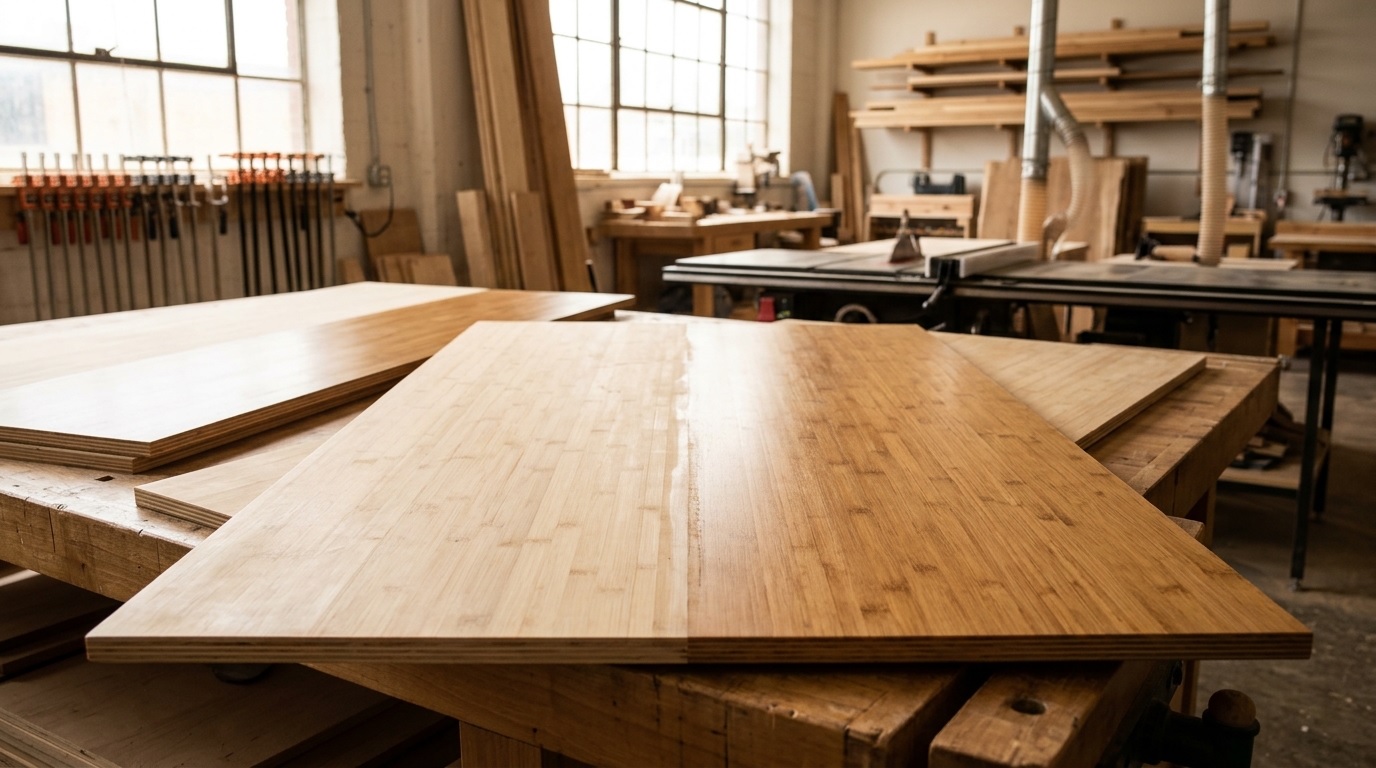
Clear finishes deliver the most reliable, durable, and visually consistent results on bamboo plywood compared to either paint or penetrating stain. Unlike open-pored domestic hardwoods such as red oak or ash, architectural bamboo plywood is engineered from compressed strips of giant Moso grass whose tightly packed vascular bundles and natural silica content resist pigment absorption. Attempting to apply conventional wood stain frequently causes uneven blotching around growth nodes, while opaque paint requires heavy stain-blocking primers and hides the linear grain that makes bamboo worth specifying in the first place. Clear topcoats—particularly waterborne polyurethanes, hardwax oils, and catalyzed varnishes—bond cleanly to factory-sanded bamboo fibers while preserving natural color depth and surface hardness.
Structural Anatomy of Bamboo Plywood
Bamboo plywood behaves differently from traditional timber veneers under a brush or spray gun because bamboo is a giant monocot grass rather than a dicot tree. Woodworkers who treat bamboo panels like birch, maple, or walnut often run into adhesion failures and patchy coloration during finishing.
Vascular Bundles and Silica
Bamboo lacks the radial rays and large open vessels found in hardwood lumber. Instead, its culm wall consists of longitudinal vascular bundles surrounded by dense parenchyma tissue and reinforced with naturally occurring amorphous silica. Because there are no wide cellular pores to trap suspended pigment particles, wiping stains sit on top of the surface rather than soaking evenly into the fiber structure.
Core Material Parameters
- Primary Botanical Species: Moso bamboo (Phyllostachys edulis), harvested at five to six years of full culm maturity.
- Panel Density: 650 to 780 kilograms per cubic meter for standard horizontal and vertical laminated panels, and up to 1,100 kilograms per cubic meter for strand-woven sheets.
- Janka Hardness Rating: 1,380 pound-force for carbonized stock and up to 1,600 pound-force for natural blonde stock, exceeding northern red oak at 1,290 pound-force.
- Equilibrium Moisture Content: Kiln-dried at the mill to between 6 percent and 9 percent prior to hot-press lamination.
- Outer Face Lamella Thickness: Typically 0.6 millimeters on thin-face veneers and 3.0 to 4.0 millimeters on thick-face architectural three-ply panels.
- Factory Sanding Grit: Pre-sanded at the manufacturing plant to 150 or 180 grit before shipping.
Why Staining Bamboo Plywood Fails
Staining bamboo plywood rarely produces the uniform, rich tone seen on stained hardwood cabinetry. Even experienced finishers encounter sharp contrast lines, pale streaks, and premature wear when trying to alter bamboo’s natural color with oil-based or water-based stains.
Node Resistance and Blotching
Every 12 to 18 inches along a laminated bamboo strip, a dark horizontal ridge marks a former culm node where vascular fibers twist and compress tightly together. These nodal zones have significantly higher density and lower porosity than the internode sections between them. When pigment or dye stain is wiped across the panel, the internodes accept a faint tint while the hyper-dense nodes reject the colorant almost completely, creating harsh zebra-like striping across cabinet doors and tabletops.
Thin Face Veneer Risks
Correcting a blotchy stain job on solid oak simply requires planing or sanding down to fresh wood, but bamboo plywood offers very little margin for aggressive stock removal. On panels manufactured with a 0.6-millimeter surface veneer, heavy sanding with 80-grit or 100-grit paper can quickly cut straight through the outer bamboo layer into the dark phenolic or urea-formaldehyde adhesive line beneath. Once the glue line is exposed, the panel cannot be salvaged with a clear coat.
Factory Carbonization Alternatives
Builders seeking a darker, warmer aesthetic do not need chemical stains to achieve it. Manufacturers produce carbonized bamboo plywood by pressure-steaming raw bamboo strips before pressing, which caramelizes the natural starches and sugars throughout the entire thickness of every strip. Because the warm amber or honey-brown hue runs all the way through the fiber, minor surface scratches or edge profiling reveal the exact same color underneath rather than exposing pale raw wood.
Challenges with Painting Bamboo Plywood
Painting bamboo plywood is technically viable for modern slab-front cabinetry or architectural wall paneling, yet it introduces specific chemical and mechanical hurdles that demand careful surface preparation.
Caramelized Sugar Bleed-Through
Carbonized bamboo panels contain thermally altered sugars and extractives that readily migrate into water-based primers. Applying a standard latex acrylic primer directly over carbonized bamboo often results in yellowish-brown stains bleeding through the white or pastel topcoat within weeks. Preventing extractive bleed requires sealing the raw surface first with a dewaxed shellac primer or a high-build solvent-based alkyd stain blocker before applying colored enamel.
Node Telegraphing Over Time
Although cross-laminated bamboo plywood exhibits strong dimensional stability—moving roughly 0.14 to 0.18 percent across its width for every 1 percent change in moisture content—the dense nodes and softer internodes still expand and contract at slightly different rates during seasonal humidity swings. Rigid, low-build lacquer paints can develop microscopic hairline fractures along strip joints and node boundaries over several heating and cooling cycles.
Paint Preparation Specs
- Initial Surface Scuff: Sand lightly with 180-grit aluminum oxide paper using a random-orbit sander to break surface glaze without rounding edges.
- Primer Selection: Two full coats of dewaxed blond shellac or pigmented alkyd stain-blocking primer to lock in caramelized sugars.
- Inter-Coat Sanding: Fine scuff with 320-grit silicon carbide paper or a non-woven abrasive pad after primer cures.
- Recommended Topcoat: Cross-linked waterborne acrylic-urethane enamel offering moderate film flexibility and block resistance.
- Aesthetic Trade-Off: Opaque paint completely conceals bamboo’s distinctive linear grain and node pattern, making standard birch plywood or medium-density fiberboard more economical choices when solid color is desired.
Why Clear Finishes Work Best
Clear finishes work with bamboo’s natural density rather than fighting against it. Because clear film-forming and penetrating finishes rely on mechanical adhesion and micro-fiber wetting rather than deep pigment absorption, they produce an even, streak-free sheen across both nodes and internodes.
Waterborne Polyurethane Coats
Two-component and single-component waterborne polyurethanes are the top choice for preserving the crisp, bright appearance of natural blonde bamboo plywood. Unlike oil-modified urethanes that impart an amber cast over time, non-yellowing aliphatic waterborne polyurethanes cure crystal clear. They dry rapidly between coats, emit low volatile organic compounds, and provide high Taber abrasion resistance suited for kitchen cabinets, retail fixtures, and commercial worktops.
Hardwax Oil Finishes
Hardwax oils combine natural plant oils such as linseed, sunflower, or soybean oil with carnauba and candelilla waxes to form a breathable, low-luster finish. On carbonized bamboo plywood, hardwax oil deepens the warm caramel tones and creates a smooth, tactile surface that feels like natural wood rather than plastic film. Maintenance is straightforward because worn areas on dining tables or desks can be cleaned and spot-recoated without sanding the entire panel.
Clear Finish Parameters
- Waterborne Polyurethane: Available in dead flat, matte, satin, and semi-gloss; recoat window of 2 to 4 hours; full chemical cure in 7 days; ideal for vertical cabinetry, wall panels, and high-traffic commercial millwork.
- Hardwax Oil: Available in matte and satin; single-coat or two-coat application; full cure in 5 to 7 days; ideal for furniture, tabletops, and residential shelving requiring easy spot repair.
- Catalyzed Conversion Varnish: Available in satin and semi-gloss; spray-applied only; full cure in 3 to 5 days; ideal for production cabinet shops needing maximum moisture and household chemical resistance.
- UV-Cured Factory Urethane: Pre-finished at the mill with aluminum oxide reinforcement; immediate handling; ideal for large commercial installations seeking uniform film thickness and zero on-site finishing odors.
Best Practices for Applying Clear Coats
Even the best clear topcoat can peel or look cloudy if the bamboo surface is over-sanded or contaminated with fine silica dust prior to application. Following a disciplined preparation sequence ensures strong mechanical bonding and an even satin or matte luster.
Sanding Grit Progression
Stop final raw-wood sanding at 180 grit or 220 grit before applying your first coat of finish. Sanding bamboo plywood to 320 or 400 grit while bare actually burnishes the silica-rich fibers, closing off microscopic surface texture so waterborne polyurethanes and hardwax oils cannot grip the substrate. Always sand parallel to the longitudinal grain direction using sharp aluminum oxide or ceramic abrasives, and ease sharp 90-degree panel edges slightly with a sanding block so finish builds evenly along corners.
Sealing and Topcoating
After final sanding at 180 or 220 grit, vacuum the entire panel with a soft brush attachment and wipe away residual dust using a slightly damp microfiber cloth or a tack cloth compatible with your chosen finish. For waterborne finishes, lightly misting the bare bamboo with distilled water and sanding once more with 220-grit paper after it dries knocks down raised surface fibers before the first sealer coat goes on. Apply two to three thin, even coats of clear finish rather than one heavy flood coat, scuffing gently with 320-grit paper between coats to remove dust nibs and achieve a smooth, professional feel.
Choosing the right finish for bamboo plywood starts at the lumberyard rather than the finishing bench. Selecting natural blonde or factory-carbonized panels gives you stable, through-body color straight from the press, allowing a clear waterborne polyurethane or hardwax oil to protect the dense Moso fibers while showcasing the crisp linear grain and organic node rhythm that make bamboo plywood stand out in architectural interiors.